ASTM D3078 Vacuum Leak Tester for Flexible Packaging
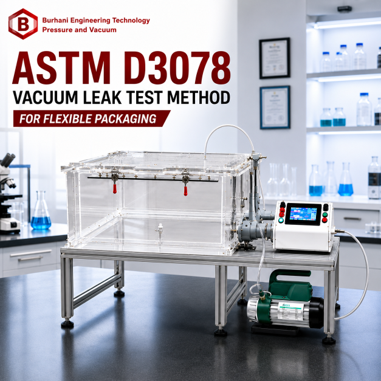
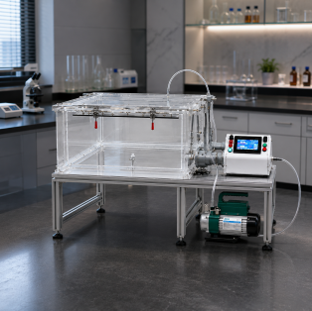
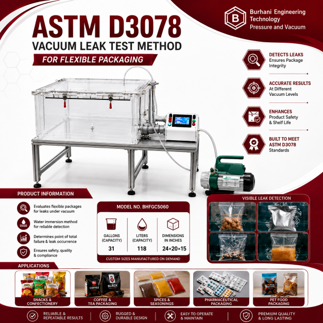
Burhani Engineering Technology manufactures professional vacuum leak-testing equipment for flexible packaging using the vacuum chamber bubble-emission method. The ASTM D3078 method is specifically designed for evaluating gross leaks in flexible packaging containing headspace gas.
By applying an external vacuum to a submerged package, this apparatus enables operators to visually detect leakage paths through bubble emission, verifying the integrity of seals and packaging materials.
What is ASTM D3078?
ASTM D3078 is a standard test method used for determining gross leaks in suitable flexible packages containing headspace gas. It relies on bubble emission under controlled vacuum conditions to provide immediate visual confirmation of package integrity.
How Does the ASTM D3078 Vacuum Leak Test Work?
The testing process is straightforward and relies on pressure differentials:
01 — Package Placement
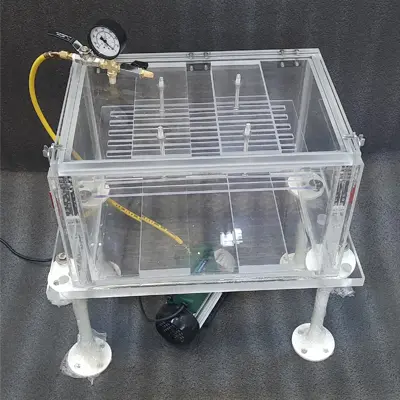
The flexible package is placed inside the transparent chamber.
02 — Liquid Immersion
The package is submerged in test liquid (typically water) beneath a porous plate.
03 — Chamber Sealing
The chamber lid is closed and properly sealed.
04 — Controlled Vacuum
Controlled vacuum is applied to the chamber, lowering external pressure.
05 — Bubble Observation
Gas inside the package expands. If there is a leakage path, gas escapes.
06 — Leak Identification
The operator visually observes bubble formation to locate the leak.
Test Results: PASS / FAIL
No evidence of leakage under the established test conditions, subject to the manufacturer's approved acceptance criteria.
Continuous or consistent bubble formation from a particular location. This may indicate a leakage path, pinhole, puncture, seal channel, or other package defect.
Key Features of ASTM D3078 Vacuum Leak Tester
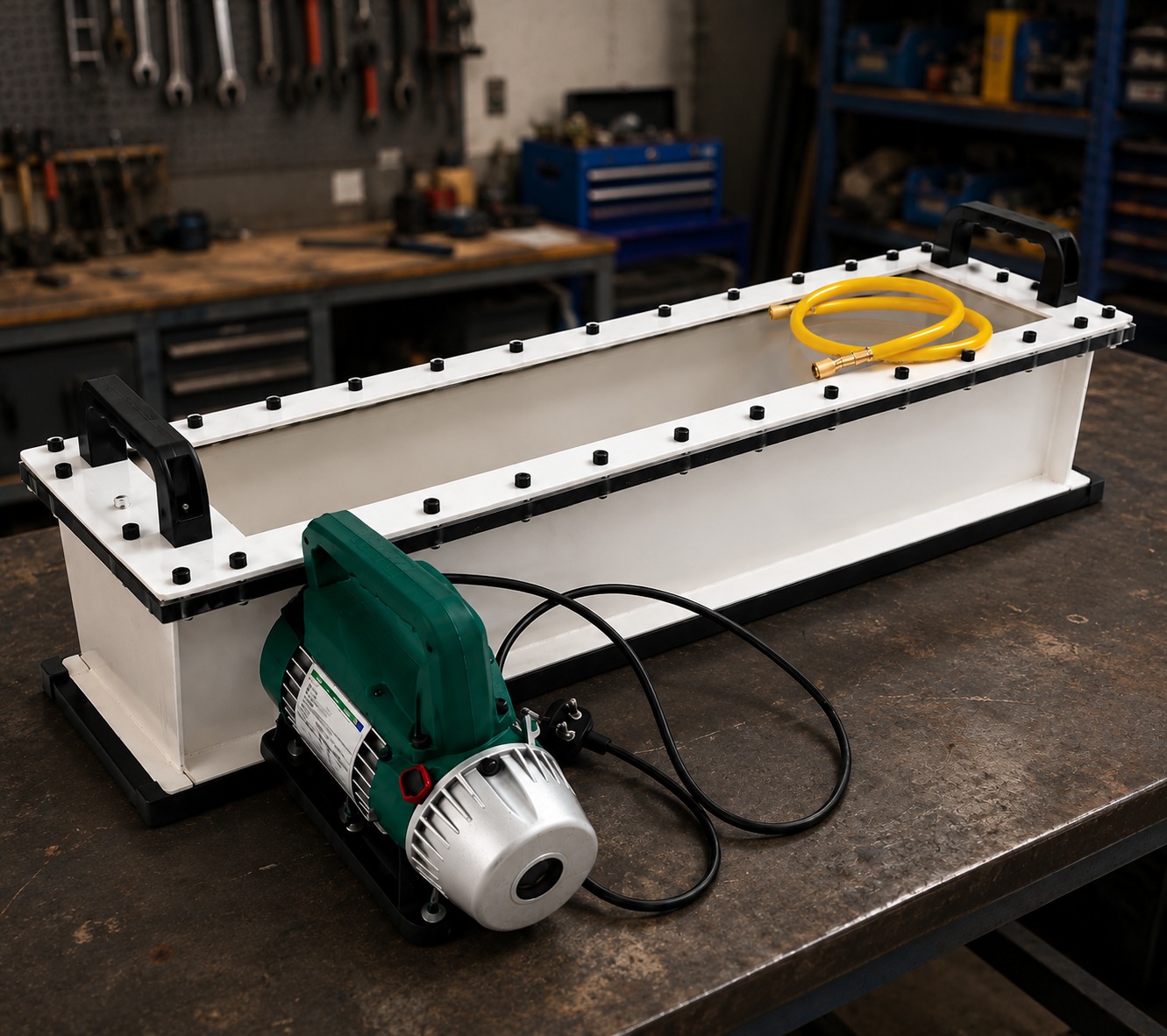
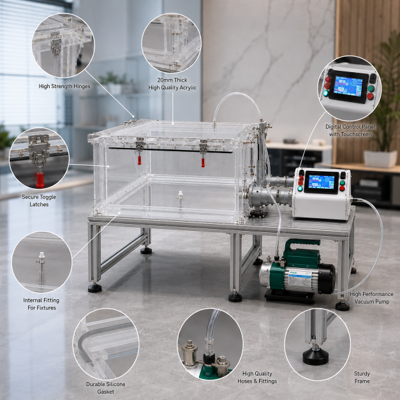
Transparent Vacuum Chamber
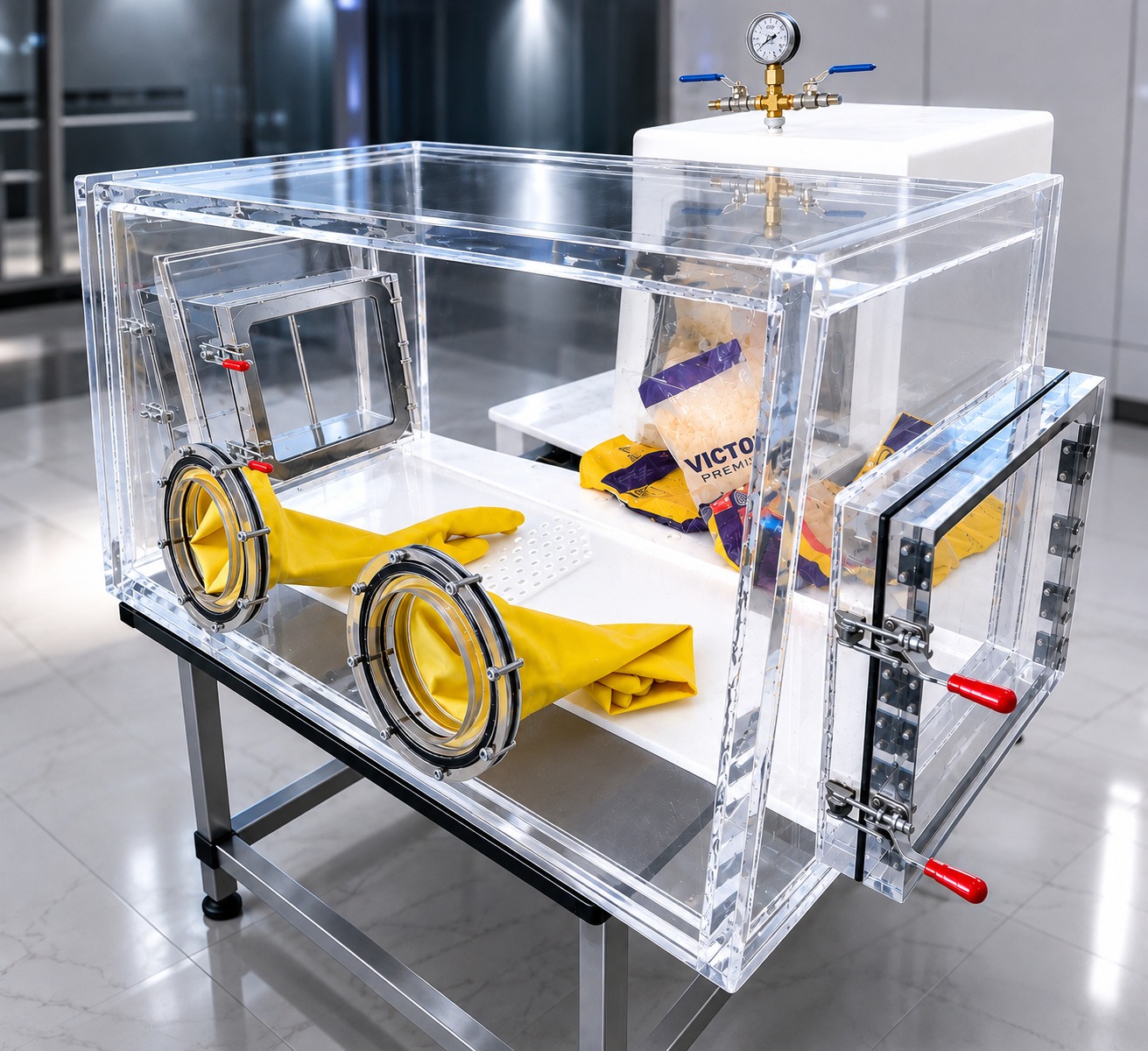
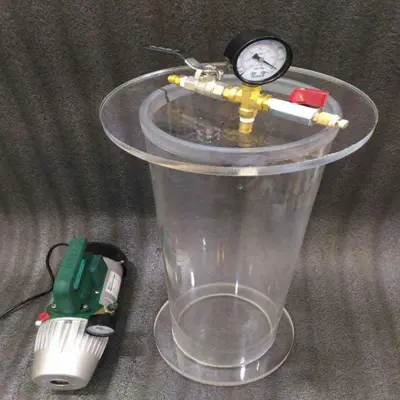
Provides full 360-degree visibility for accurate bubble observation.
Controlled Vacuum Generation
Precise vacuum application with a digital control system and high-quality vacuum components.
Visual Bubble Leak Detection
Easily detect and locate approximate leak locations through bubble streams.
Durable & Easy Operation
Durable construction with easy operation, maintenance, and available custom chamber sizes.
Applications of ASTM D3078 Vacuum Leak Testing
- Food Packaging
- Coffee & Tea Packaging
- Pharmaceutical Packaging
- Pet Food Packaging
- Consumer Product Packaging
- Flexible Packaging Manufacturing
- Packaging R&D
- Quality Control Laboratories
Package Seal Integrity Testing
ASTM D3078 is instrumental in supporting the investigation of packaging defects during quality control and packaging-process analysis. By identifying exactly where a package is leaking, manufacturers can diagnose and resolve issues such as:
- Improper heat sealing
- Seal channels
- Punctures & Material damage
- Pinholes
- Contamination in seal areas
- Wrinkled or folded seals
- Handling damage
- Manufacturing defects
Advantages of the Vacuum Bubble Emission Method
Visual Results
Immediate visual confirmation of integrity.
Approximate Leak Localization
Pinpoint exactly where the packaging failed.
Simple & Fast
Simple test principle allowing rapid evaluation.
Broad Applications
Suitable for a wide variety of flexible packaging.
Process Optimization
Identify root causes to optimize the sealing process.
Quality Assurance
Reliable QA support for production lines.
High-Visibility Transparent Test Chamber
Our clear chamber construction is crucial for bubble-emission testing. The transparent design allows operators to easily and accurately observe bubble streams, package expansion, seal-area leakage, and material punctures. It also provides a clear view of package positioning and test-liquid conditions, ensuring accurate test execution.
Custom ASTM D3078 Vacuum Leak Test Chambers
Burhani Engineering Technology can manufacture custom chamber sizes and configurations according to your specific requirements. We can tailor solutions based on factors such as package dimensions, chamber capacity, testing volume, laboratory space, vacuum requirements, control-system preferences, and production QC workflow.