What is ASTM F2096?
The ASTM F2096 Internal Pressurization Bubble Leak Test is a highly reliable, destructive test method designed to detect gross leaks in packaging. Unlike external vacuum testing, ASTM F2096 uses internal positive pressurization to evaluate package seal integrity and identify microscopic defects down to 250-micron holes.
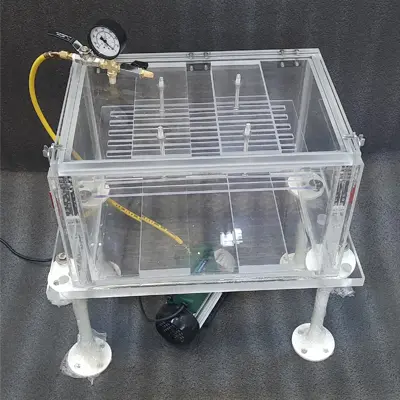
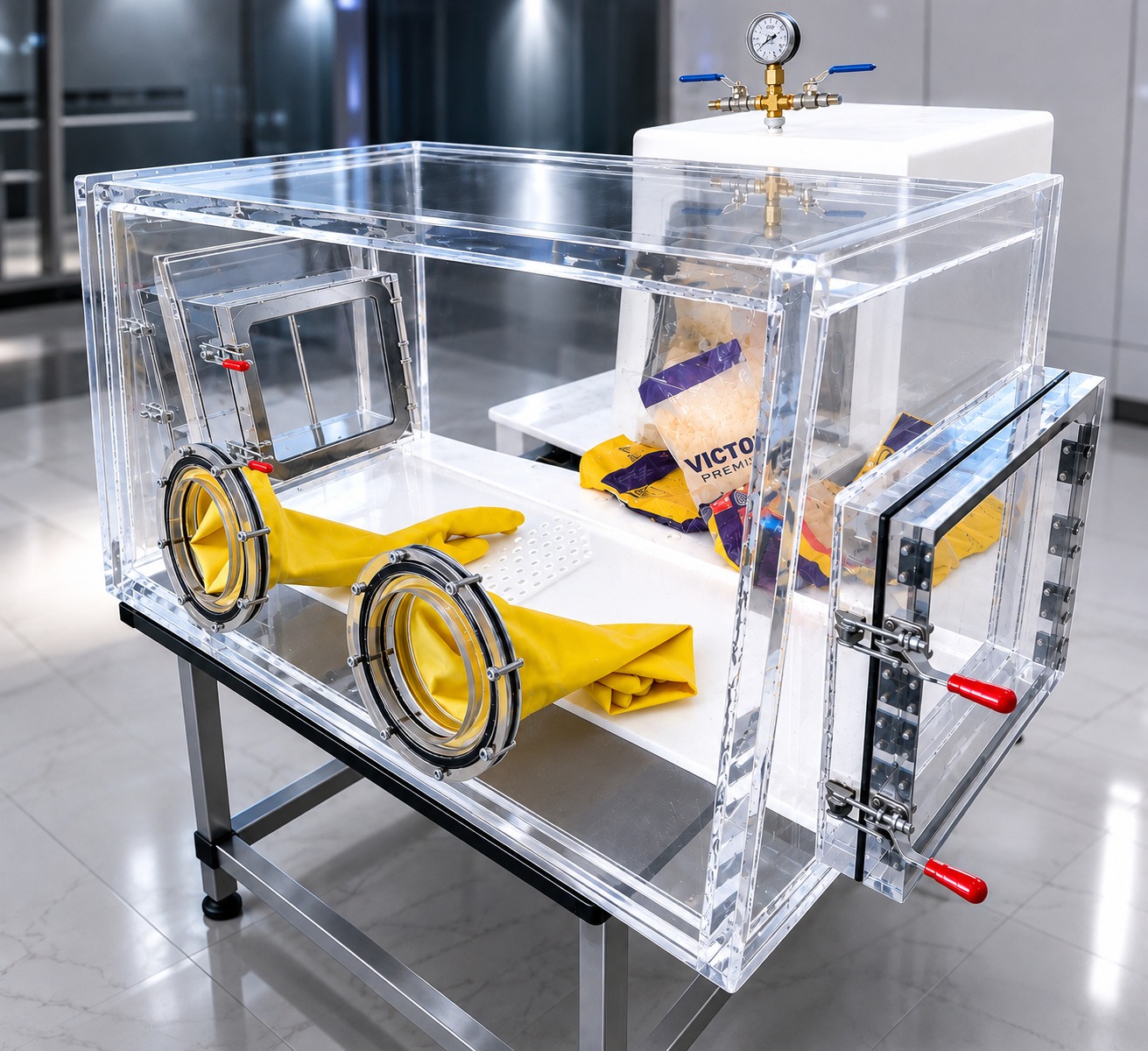
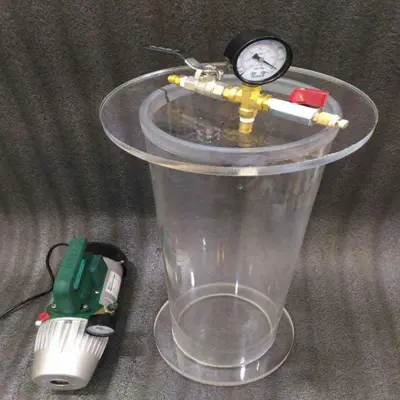
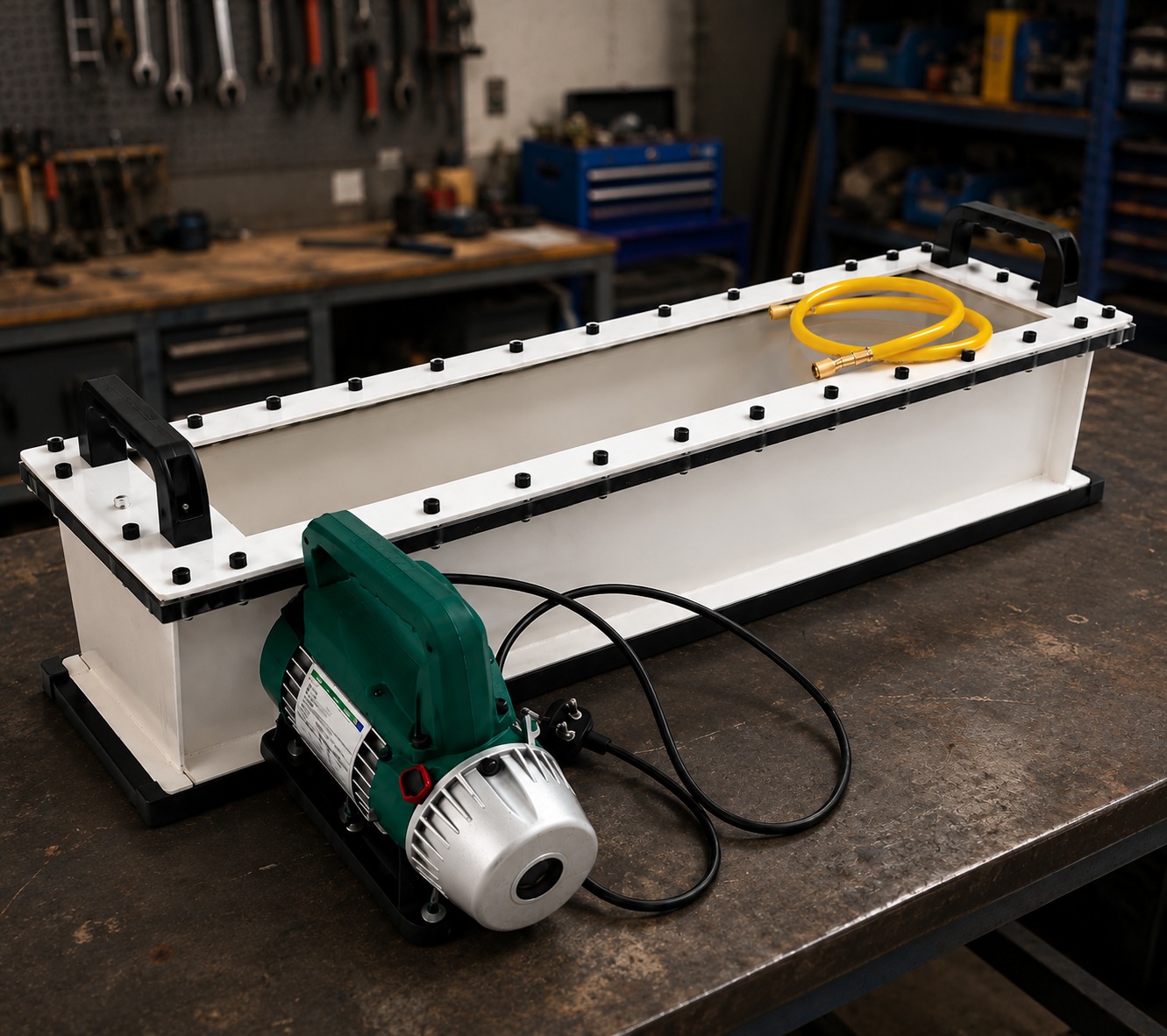
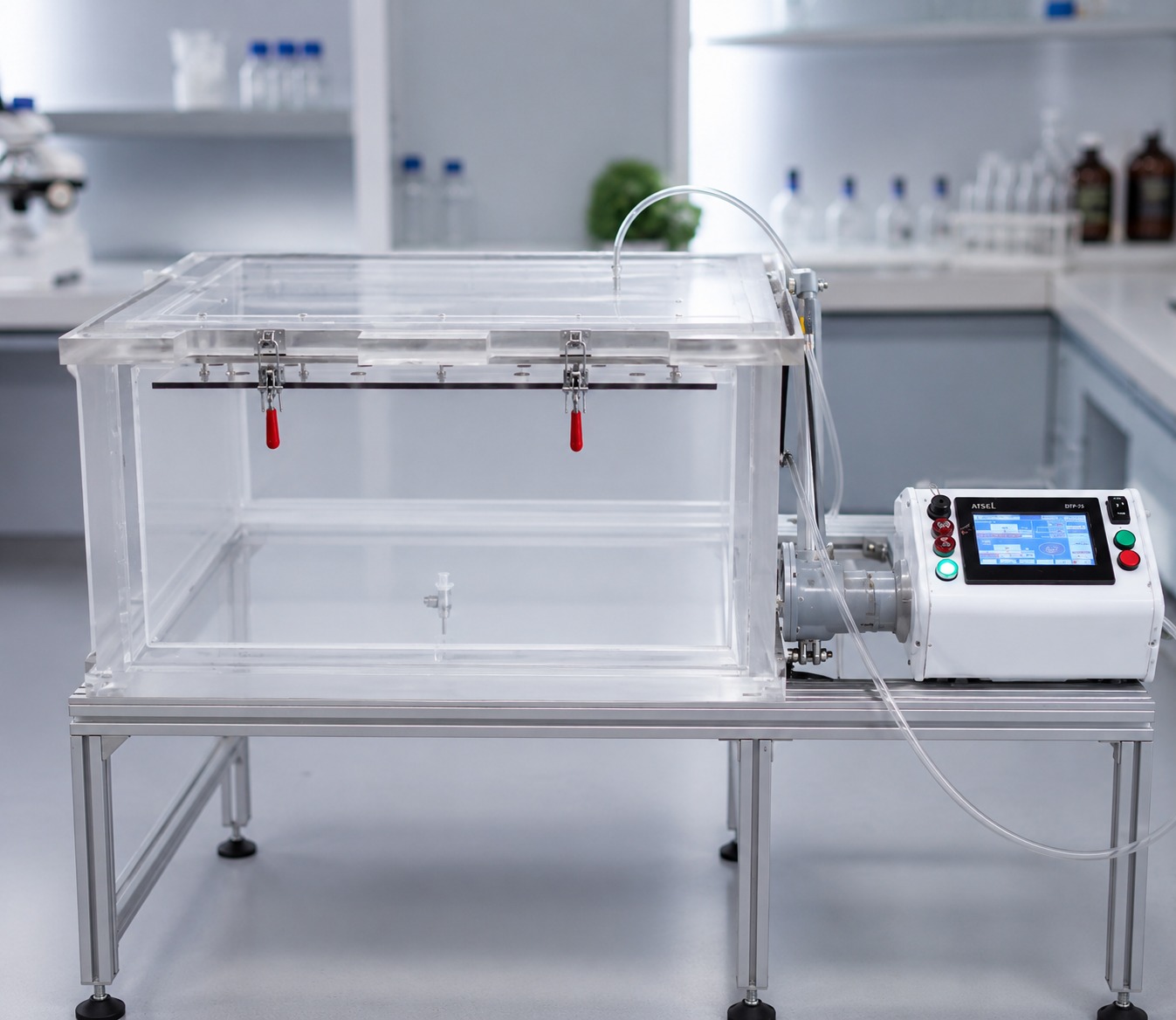
By submerging a sealed package in a transparent water-filled test chamber and introducing controlled internal pressure, operators can visually observe bubble emission to rapidly identify and localize packaging defects.

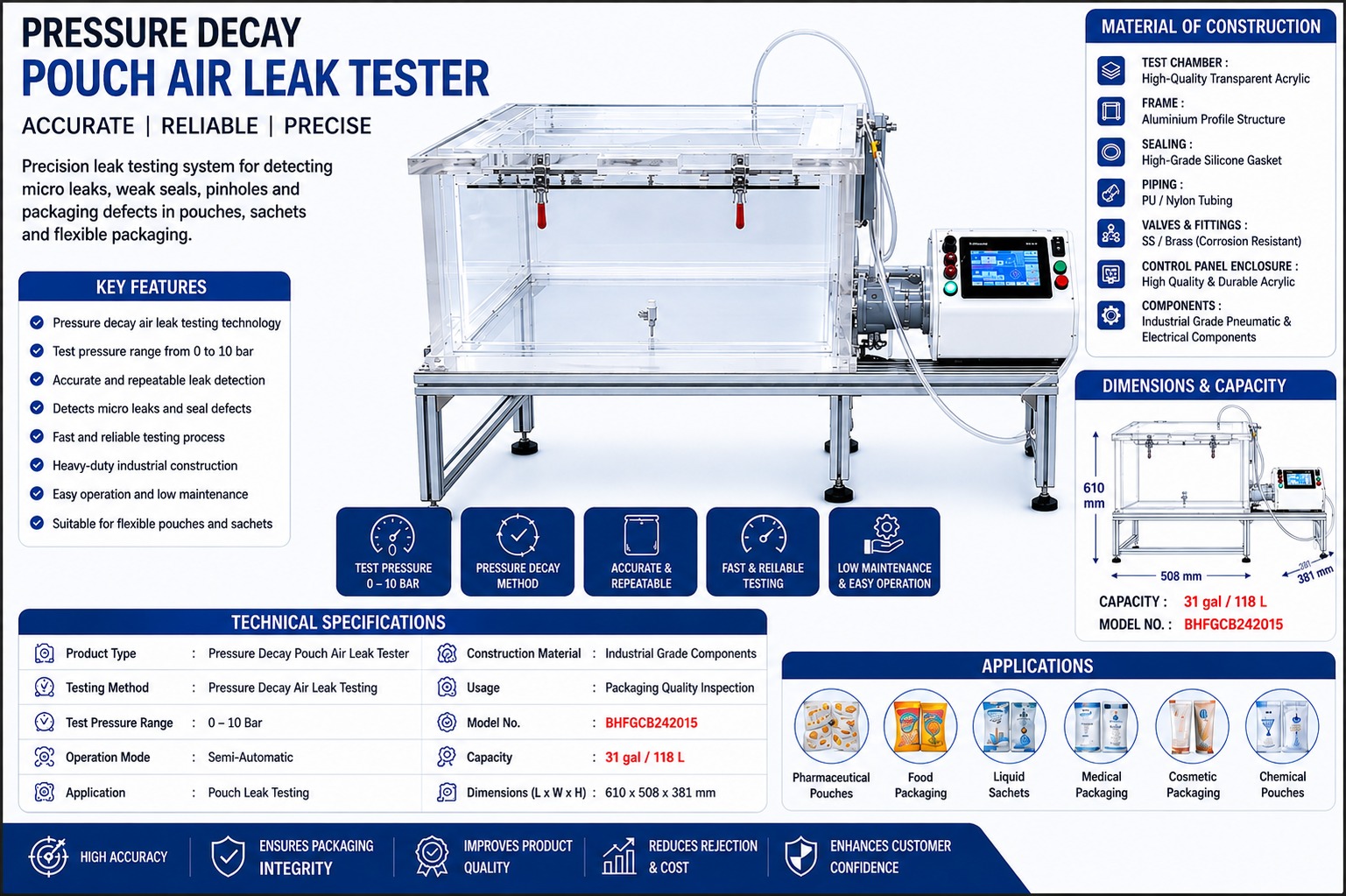
How Does the Test Work?
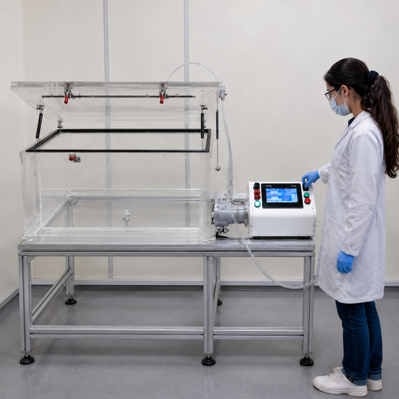
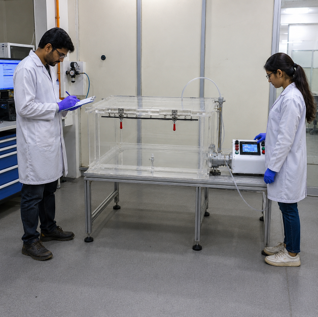
The internal pressurization method requires the package to be punctured to create an air connection. Controlled positive air pressure is then supplied to the inside of the package while it is submerged in a clear acrylic tank. If the package's sterile barrier or seal is compromised, a steady stream of bubbles will emanate from the defect location.
The system provides visual test results within 10 to 30 seconds. A major advantage of this method is that it allows operators to rapidly identify and pinpoint the exact location of the leak, distinguishing between material defects and seal failures.
Key Features
Controlled Internal Pressurization
Precise air pressure regulation to test packages without bursting them.
Transparent Test Chamber
Clear acrylic tank allows for 360-degree visual leak identification.
Defect Localization
Instantly locate the exact point of seal or material failure.
Flexible Package Compatibility
Ideal for testing pouches, sealed trays, and flexible packaging.
Applications
The ASTM F2096 Bubble Leak Test Apparatus is a critical tool for ensuring package seal evaluation and integrity. It is widely used across multiple industries for packaging R&D and production Quality Control.
- Medical-device packaging
- Pharmaceutical packaging
- Flexible pouches
- Heat-sealed packages
- Sterile barrier packaging
- Food packaging
Test Sensitivity & Packaging Defects
This gross leak detection system is highly sensitive and helps prevent catastrophic failures in the supply chain by identifying packaging defects early. It verifies that the sterile barrier is intact, ensuring protection against environmental contamination.